
📢 𝗡𝗘𝗪 𝗜𝗨𝗟𝗧𝗖𝗦 𝗦𝗨𝗦𝗧𝗔𝗜𝗡𝗔𝗕𝗜𝗟𝗜𝗧𝗬 𝗣𝗨𝗕𝗟𝗜𝗖𝗔𝗧𝗜𝗢𝗡
🌍 𝗠𝗮𝗽𝗽𝗶𝗻𝗴 𝗟𝗲𝗮𝘁𝗵𝗲𝗿’𝘀 𝗘𝗻𝘃𝗶𝗿𝗼𝗻𝗺𝗲𝗻𝘁𝗮𝗹 𝗘𝘅𝘁𝗲𝗿𝗻𝗮𝗹𝗶𝘁𝗶𝗲𝘀
𝗔 𝗽𝗿𝗲-𝗰𝗼𝗺𝗽𝗲𝘁𝗶𝘁𝗶𝘃𝗲 𝗳𝗼𝘂𝗻𝗱𝗮𝘁𝗶𝗼𝗻 𝗳𝗼𝗿 𝗷𝗼𝗶𝗻𝘁 𝗮𝗰𝘁𝗶𝗼𝗻
The IULTCS Sustainability Commission Team (IUS) is proud to introduce the first issue of a new publication series dedicated to examining the key environmental externalities across the leather value chain.
The objective is not to reduce sustainability to a single number or a simple slogan.
Instead, this publication aims to create a 𝗰𝗼𝗺𝗺𝗼𝗻, 𝘀𝗰𝗶𝗲𝗻𝗰𝗲-𝗯𝗮𝘀𝗲𝗱 𝗿𝗲𝗳𝗲𝗿𝗲𝗻𝗰𝗲 𝗽𝗼𝗶𝗻𝘁 for the industry — one that recognizes the complexity of environmental impacts, the importance of context, and the need for collaboration across the entire value chain.
𝗧𝗵𝗶𝘀 𝗳𝗶𝗿𝘀𝘁 𝗶𝘀𝘀𝘂𝗲 𝗳𝗼𝗰𝘂𝘀𝗲𝘀 𝗼𝗻 𝘁𝗵𝗿𝗲𝗲 𝗺𝗮𝗷𝗼𝗿 𝗮𝗿𝗲𝗮𝘀:
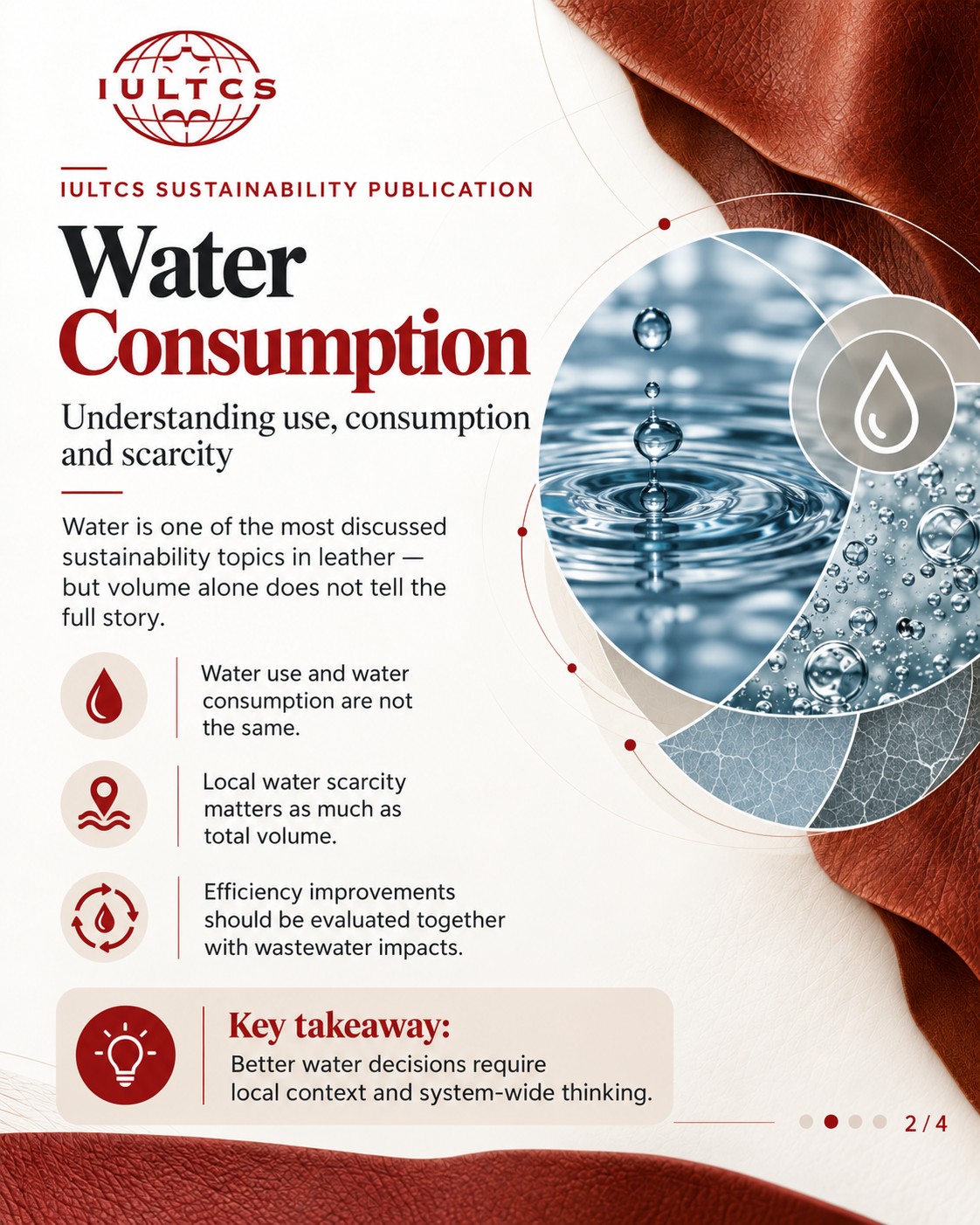
💧 𝗪𝗮𝘁𝗲𝗿 𝗖𝗼𝗻𝘀𝘂𝗺𝗽𝘁𝗶𝗼𝗻
How water use should be understood across upstream animal production and industrial tanning operations — including the crucial distinction between water use, water consumption, water footprint and water scarcity.
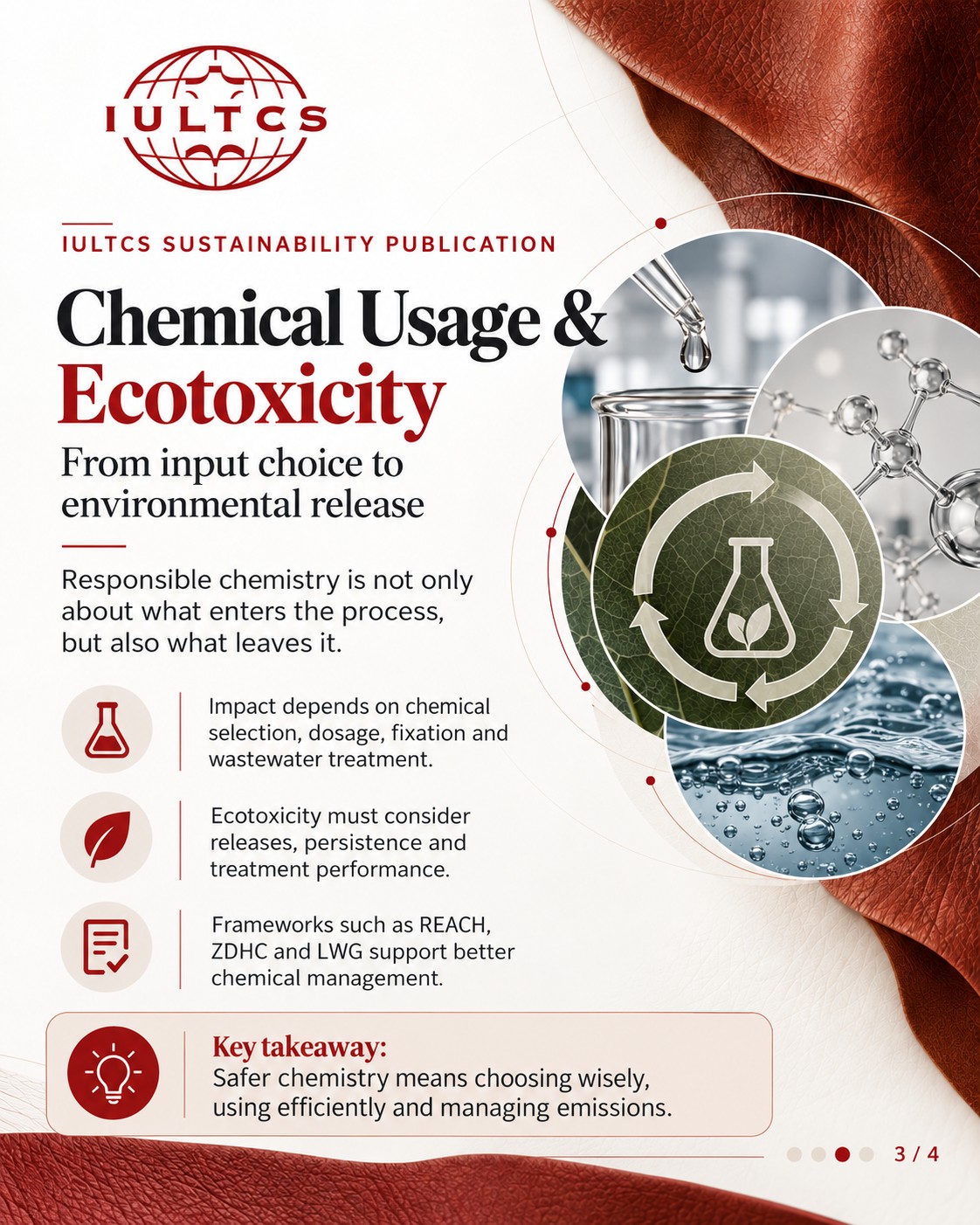
🧪 𝗖𝗵𝗲𝗺𝗶𝗰𝗮𝗹 𝗨𝘀𝗮𝗴𝗲 𝗮𝗻𝗱 𝗘𝗰𝗼𝘁𝗼𝘅𝗶𝗰𝗶𝘁𝘆
A closer look at chemical inputs, process efficiency, environmental release pathways, ecotoxicological considerations and the role of frameworks such as ZDHC, LWG and REACH.
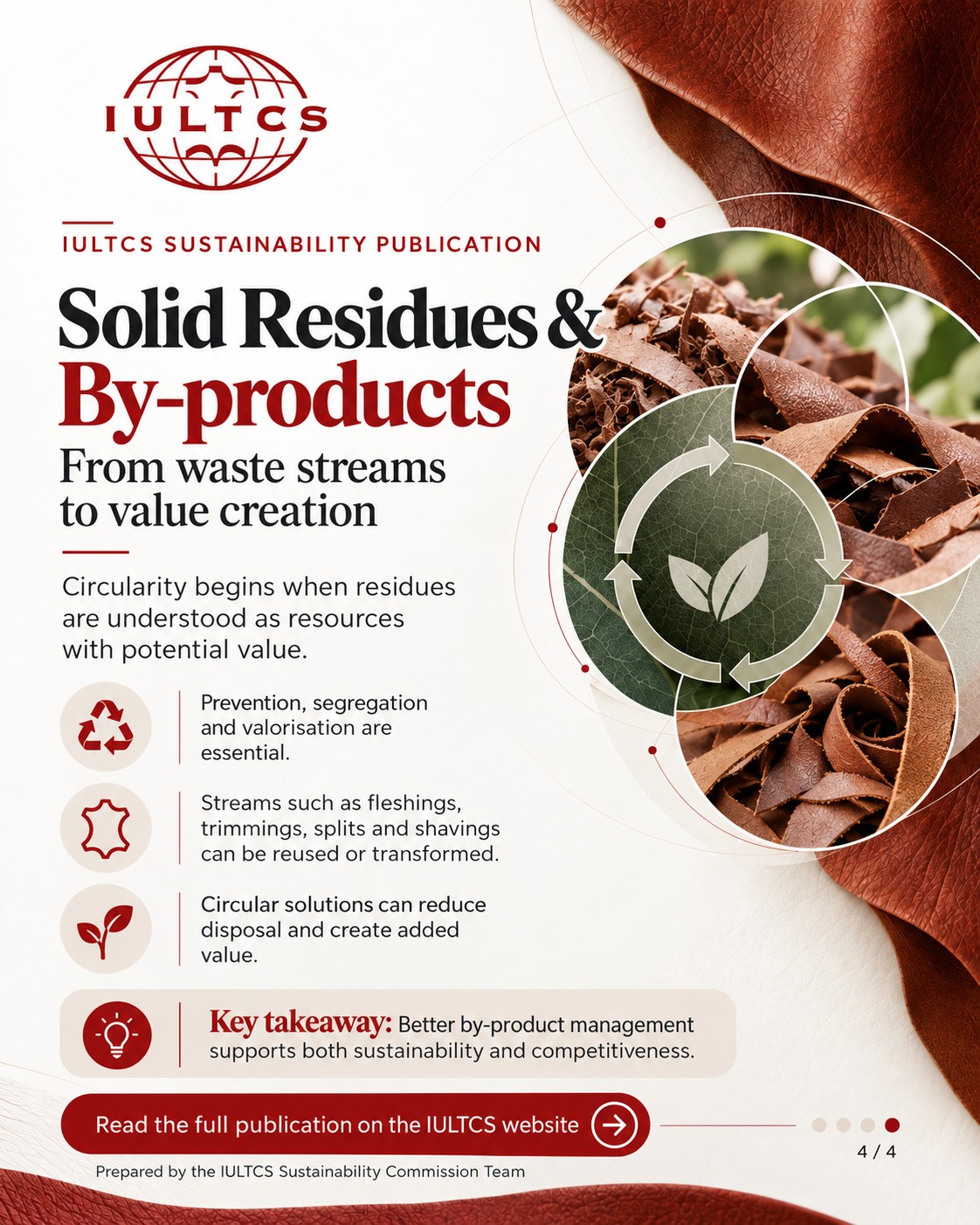
♻️ 𝗦𝗼𝗹𝗶𝗱 𝗥𝗲𝘀𝗶𝗱𝘂𝗲𝘀 𝗮𝗻𝗱 𝗕𝘆-𝗽𝗿𝗼𝗱𝘂𝗰𝘁𝘀
How tanneries can move from disposal toward prevention, reuse, recycling, valorisation and more circular use of material streams such as fleshings, splits, shavings, hair and other by-products.
One of the most important messages of the publication is this:
𝗦𝘂𝘀𝘁𝗮𝗶𝗻𝗮𝗯𝗶𝗹𝗶𝘁𝘆 𝗰𝗮𝗻𝗻𝗼𝘁 𝗯𝗲 𝗲𝘃𝗮𝗹𝘂𝗮𝘁𝗲𝗱 𝘁𝗵𝗿𝗼𝘂𝗴𝗵 𝗮 𝘀𝗶𝗻𝗴𝗹𝗲 𝗶𝗻𝗱𝗶𝗰𝗮𝘁𝗼𝗿.
Reducing water, for example, may affect wastewater concentration, sludge generation, energy demand and chemical use. Environmental progress therefore requires a 𝗺𝘂𝗹𝘁𝗶-𝗽𝗮𝗿𝗮𝗺𝗲𝘁𝗲𝗿, 𝘀𝘆𝘀𝘁𝗲𝗺𝗶𝗰 𝗮𝗽𝗽𝗿𝗼𝗮𝗰𝗵.
The publication was prepared by:
𝗞𝗶𝗺 𝗦𝗲𝗻𝗮
𝗗𝗼𝘂𝗴𝗹𝗮𝘀 𝗖𝗮𝗺𝗽𝗼𝘀
𝗩𝗶𝘃𝗶𝗮𝗻 𝗗𝗶𝗻𝗮𝗺𝗮𝗿𝗰𝗼
𝗙𝗿𝗮𝗻𝗰𝗮 𝗡𝘂𝘁𝗶
𝗧𝗶𝘇𝗶𝗮𝗻𝗮 𝗚𝗮𝗺𝗯𝗶𝗰𝗼𝗿𝘁𝗶
𝗦𝗼𝗻𝗶𝗮 𝗭𝗮𝗽𝗮𝘁𝗮
👏 A sincere thank you to the entire IULTCS Sustainability Commission Team for bringing together scientific knowledge, industry experience and a collaborative mindset in this important work.
𝗢𝘂𝗿 𝗶𝗻𝗱𝘂𝘀𝘁𝗿𝘆 𝗱𝗼𝗲𝘀 𝗻𝗼𝘁 𝗻𝗲𝗲𝗱 𝘀𝗶𝗺𝗽𝗹𝗶𝗳𝗶𝗲𝗱 𝗱𝗲𝗯𝗮𝘁𝗲𝘀.
𝗜𝘁 𝗻𝗲𝗲𝗱𝘀 𝗱𝗮𝘁𝗮, 𝘀𝗰𝗶𝗲𝗻𝗰𝗲, 𝘁𝗿𝗮𝗻𝘀𝗽𝗮𝗿𝗲𝗻𝗰𝘆 𝗮𝗻𝗱 𝗰𝗼𝗹𝗹𝗮𝗯𝗼𝗿𝗮𝘁𝗶𝗼𝗻.
And this publication is an important step in that direction.
The Sustainability Commission oversees activities such as advising on sustainability policies, coordinating with various stakeholders, and making recommendations on environmental programs.
This includes areas like energy and water conservation, waste management, circular economy and environmental impact assessment.
Kim Sena